Show me all Nike projects
Home
AKQA Impact Label System

Oxford UniversityEnvironmental Impact Labelling

Insight

To reach net-zero, we need to know the impact of the foods we eat.

Although food production is responsible for a third of all human-induced greenhouse gas emissions, we tend to underestimate this impact at the checkout.

Labelling for price and nutritional content is standard across most grocery foods and products but making an informed choice about which are better for the environment is challenging.


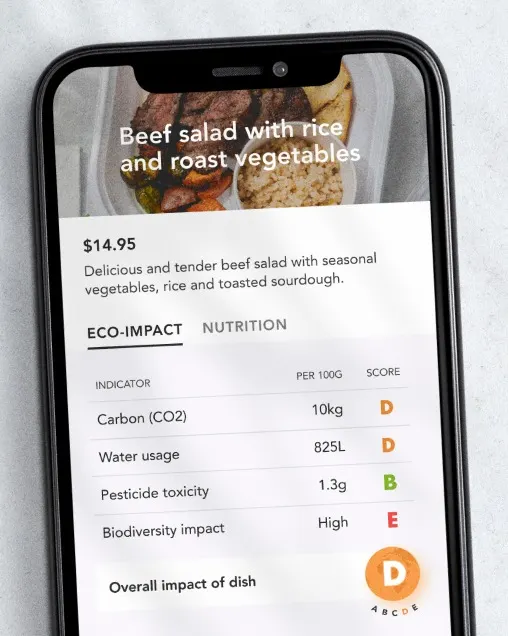
A smartphone screen displays a menu for beef salad with rice and roast vegetables, priced at $14.95, and shows eco-impact ratings with grades for carbon, water, pesticide toxicity, and biodiversity.

Idea

Designing nutrition labels for planetary health.

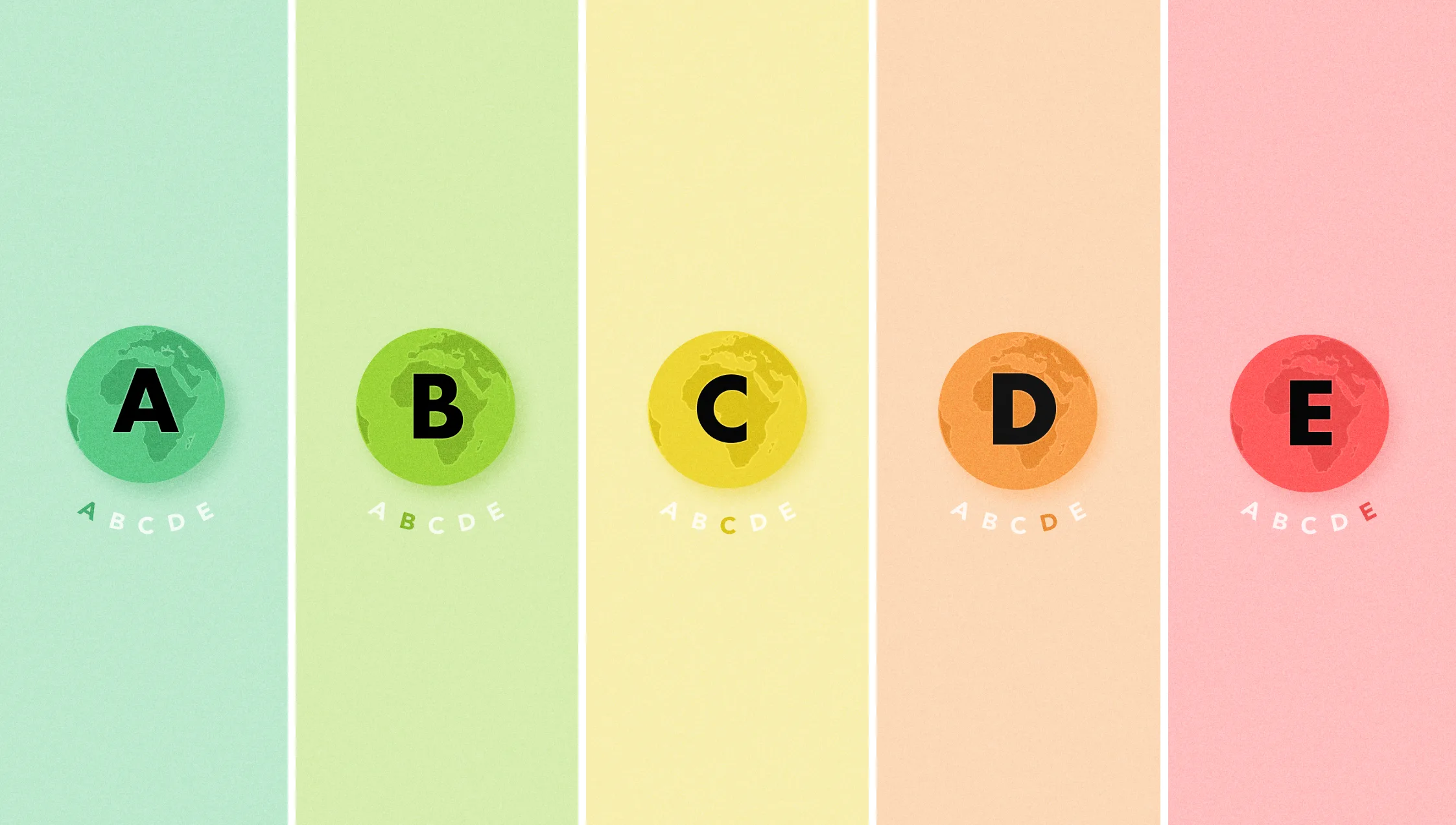
Oxford University is working with one of the world’s largest food-service companies on a pilot to trial an environmental impact framework, which includes a scoring and design system for food products to clearly communicate our foods’ footprint.


“Visibility on the true impact of the products we choose is fast becoming an expectation. Simply labelling something as carbon neutral will not stand up moving forward.”

Tim Devine, AKQA Executive Innovation Director

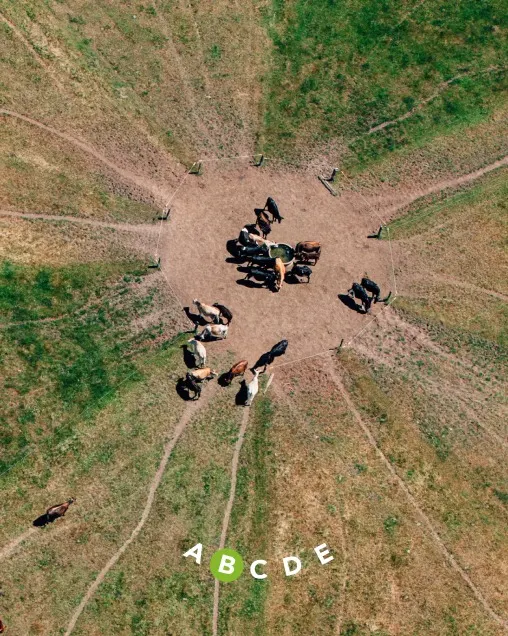
Aerial view of horses gathered in a circular dirt area on a grassy field, with five labeled points (A, B, C, D, E) arranged in a curve near the bottom of the image.

The impact labelling design system can be applied across the consumer-facing food ecosystem, from physical packaging in-store to scanning food delivery apps or reading a menu in a restaurant.

The impact score encompasses a more extensive story on our choices by going beyond greenhouse gas emissions to include insight into a product’s effects on biodiversity, pesticide toxicity and water usage. This will result in a holistic snapshot of a product’s impact across its life cycle.

Oxford University senior researcher in human behaviour, Brian Cook, says most labels only tell one side of a much wider problem: “Carbon is just one part of the issue and well-meaning consumers who buy low-carbon labelled food might unwittingly find they’ve bought a product that instead impacts biodiversity loss or pollutes local water streams.”
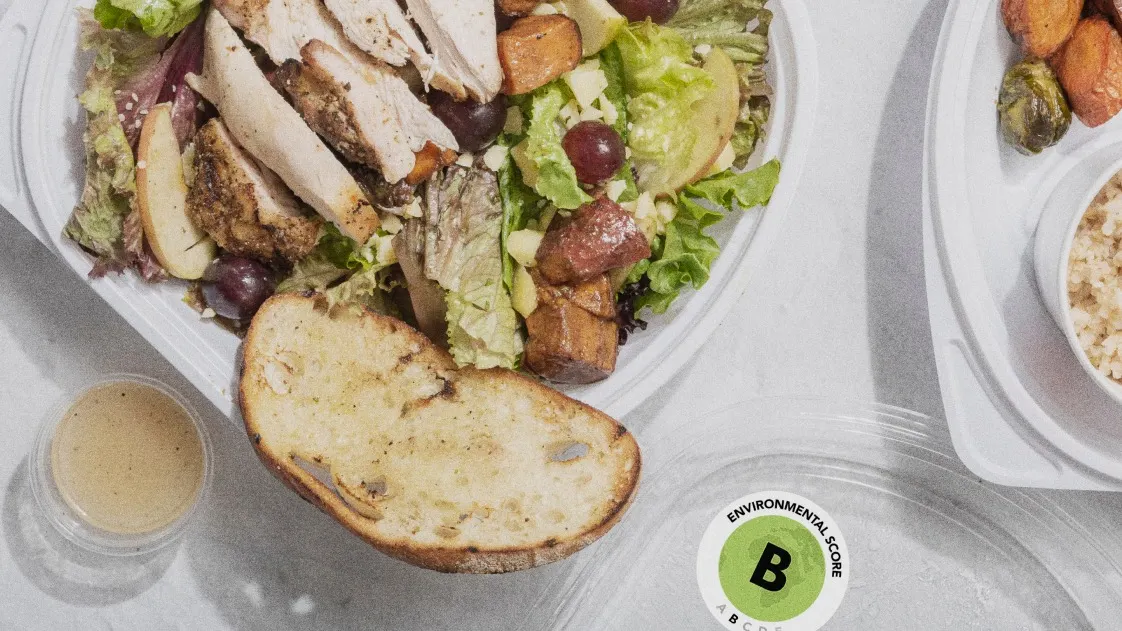
A takeout container with salad topped with sliced grilled chicken, grapes, and roasted sweet potatoes, served with a slice of bread and a small cup of dressing. A container lid labeled with a B environmental score is in view.

Impact

Changing the way people eat at scale.

After an initial online study, the impact labelling framework and design system are being trialled in more than a dozen cafeterias across the UK.

From here, the hope is to bring the solution to supermarkets and other food outlets at scale to give customers more transparency on the environmental impact of their food choices and give the planet its best shot at a net-positive future.


  • The GuardianHow green is your food? Eco-labels can change the way we eat, study shows ↘

RelatedWork

Vivaldi

The [uncertain] Four Seasons

TUFS-hero

H&M

Let’s Remake

Looop hero

Earth Speakr

The trees are talking. It’s time to start listening.

es-hero

Levi’s

Buy Better. Wear Longer.

Levi's Sustainability Hero Image

What’s yournext frontier?

Footer Fallback Image Gradient
  • Privacy Policy
  • Cookie Policy
  • Perspectives
  • AKQA Companies
  • Sustainability
  • News